Dhammayietra — Pilgrimage of Truth
The Peace Mission
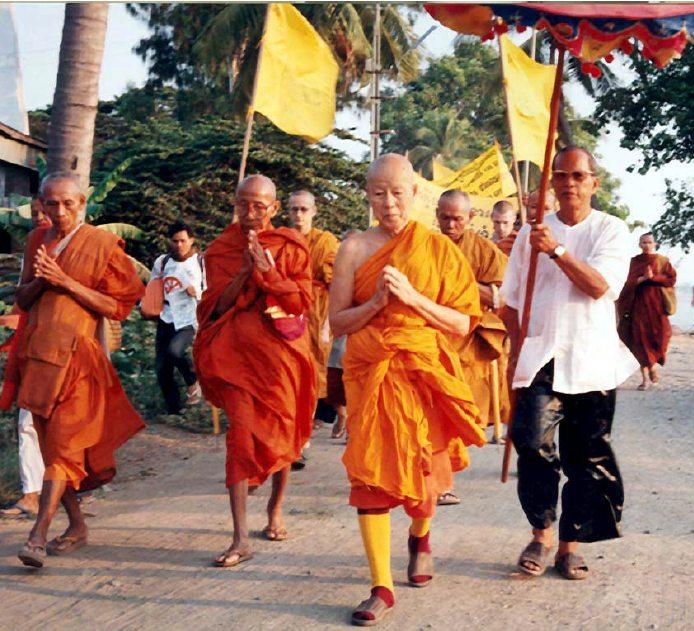
Walking through minefields for peace. Step by step, breath by breath, transforming a nation's path from war to reconciliation.
Walking through minefields for peace. Step by step, breath by breath, transforming a nation's path from war to reconciliation.
In 1992, as Cambodia prepared for its first democratic elections after decades of war, Maha Ghosananda conceived a radical act of faith. He would walk across the country — through active war zones, through areas riddled with landmines, through communities still reeling from the trauma of genocide.
This was the first Dhammayietra, meaning "pilgrimage of truth" or "pilgrimage of Dharma." Starting from the refugee camps near the Thai border, hundreds of monks and laypeople walked through some of Cambodia's most dangerous provinces, chanting, praying, and bearing witness to peace.
The walk was not merely symbolic. It was transformative. As the marchers passed through villages, people came out of their homes — many weeping — to join or simply to watch. The sight of monks walking peacefully through war-torn landscapes was a powerful statement: peace is possible.
"Step by step, breath by breath, we shall walk the path of peace."— Maha Ghosananda
The Dhammayietra became an annual event, each year addressing a different aspect of Cambodia's journey toward peace. Some walks focused on reconciliation between warring factions. Others addressed the landmine crisis, deforestation, or the plight of displaced communities.
Each march lasted several weeks, covering hundreds of kilometers on foot. Participants walked in silence or chanting, creating a moving meditation that crossed physical and spiritual boundaries.
The walks drew international attention and inspired similar peace marches in other conflict zones around the world. They demonstrated that spiritual practice could be a form of political action — that the most powerful statement against violence is the peaceful presence of those who refuse to be afraid.
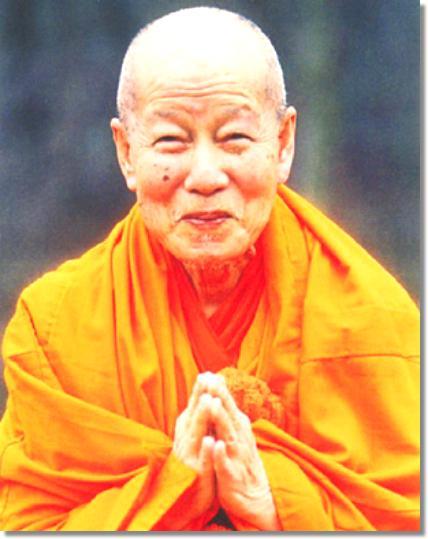
Rooted in the Buddha's teachings, Maha Ghosananda's approach to peace was both ancient and revolutionary.
True peace cannot be imposed from outside — it must grow from the quiet stillness of a peaceful heart. Only when individuals find inner peace can communities and nations follow.
Even toward those who committed the worst atrocities, Maha Ghosananda counseled forgiveness — not because the crimes were acceptable, but because hatred perpetuates suffering.
Peace is not an abstraction or a slogan. It is a practice — something to be embodied and walked, literally step by step, through the most difficult terrain.
His compassion extended to all beings without exception — victims and perpetrators alike. He saw suffering as the common thread that unites all humanity.
Maha Ghosananda's peace work did not go unnoticed by the world. He was nominated multiple times for the Nobel Peace Prize, often referred to as "the Gandhi of Cambodia" for his unwavering commitment to nonviolent social change.
He received the Niwano Peace Prize in 1998, one of the most prestigious international peace awards, recognizing his extraordinary contribution to interreligious understanding and peace. He was honored by organizations worldwide and invited to speak at the United Nations and numerous international forums.
His friendship with other great spiritual leaders — including the Dalai Lama and Thich Nhat Hanh — placed him in a global community of peacemakers who shared his vision of a world transformed through compassion.
Yet despite all recognition, Maha Ghosananda remained humble. He lived simply, as a monk, devoted to the path. When asked about his accomplishments, he would smile and redirect attention to the path itself — the journey, the practice, the peace that lives in every step.