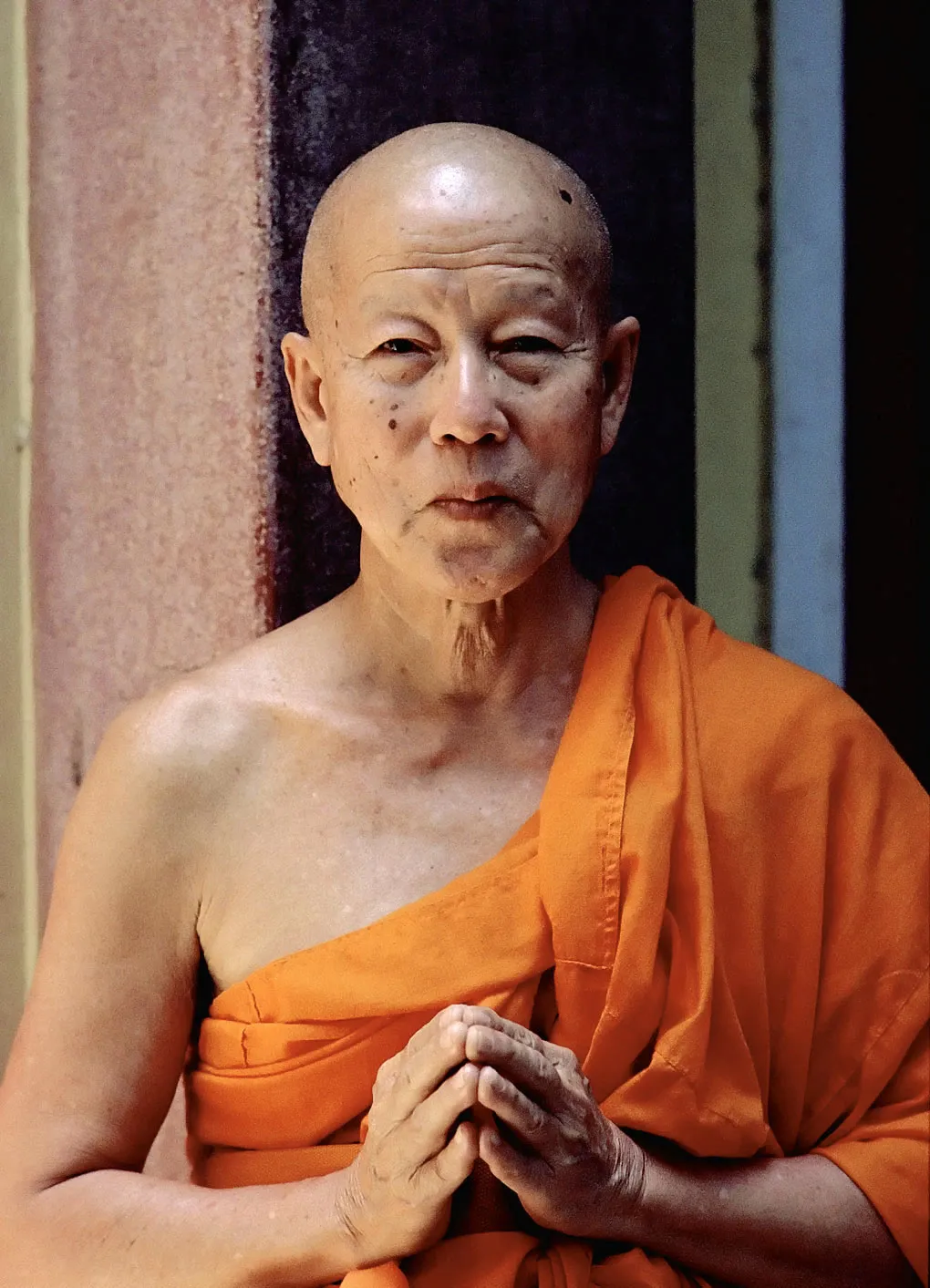
1929 — 2007
Life & Biography
From a humble village in Takeo province to the spiritual leader of a nation rising from genocide — the extraordinary journey of Maha Ghosananda.
From a humble village in Takeo province to the spiritual leader of a nation rising from genocide — the extraordinary journey of Maha Ghosananda.
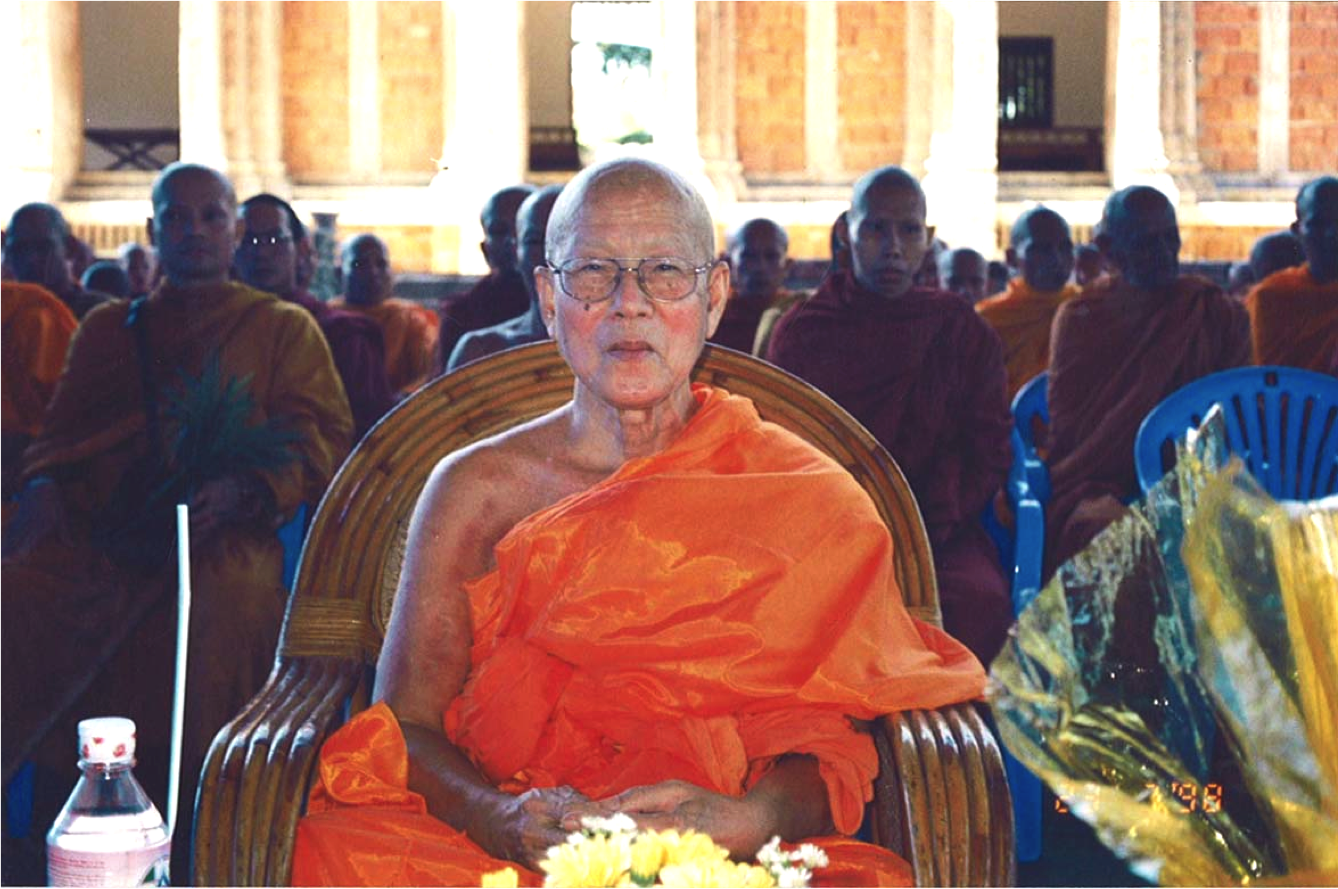
Born in 1929 in Takeo Province in southern Cambodia, the young boy who would become Maha Ghosananda showed a deep spiritual inclination from his earliest years. Growing up in rural Cambodia, he was drawn to the monasteries that formed the heart of village life, where the gentle rhythm of chanting and meditation offered a world of inner peace.
At a young age, he was ordained as a novice monk, beginning a lifelong journey of spiritual devotion. His thirst for knowledge and understanding of the Dharma was insatiable, and he quickly distinguished himself among his peers through his gentle wisdom and dedicated practice.
Maha Ghosananda's pursuit of deeper understanding led him to study at the Mahamakut Buddhist University in Thailand, and later in Nalanda, India — the ancient seat of Buddhist learning. Under the tutelage of some of the most respected Buddhist scholars of the era, he deepened his understanding of Pali scriptures and Theravāda philosophy.
He studied under the great Thai meditation master Ajahn Dhammadaro and was profoundly influenced by the teachings of engaged Buddhism. His years of study across Southeast and South Asia gave him a rare breadth of understanding — combining deep scholarly knowledge with profound meditative insight.
When the Khmer Rouge seized power in 1975 and began their campaign of genocide, Maha Ghosananda was studying abroad. This twist of fate likely saved his life — but the horror that followed would define his life's mission.
The regime systematically destroyed Cambodian Buddhism. Of an estimated 60,000 monks, fewer than 3,000 survived. Temples were demolished or converted into prisons. Sacred texts were burned. Nearly every member of Maha Ghosananda's own family perished under the regime.
When the horror was revealed to the world and Cambodian refugees began flooding into camps along the Thai border, Maha Ghosananda was among the first to arrive. In the camps, he did something both simple and extraordinary — he began to chant. In a place of unimaginable suffering, he offered the ancient words of the Buddha, and people wept.
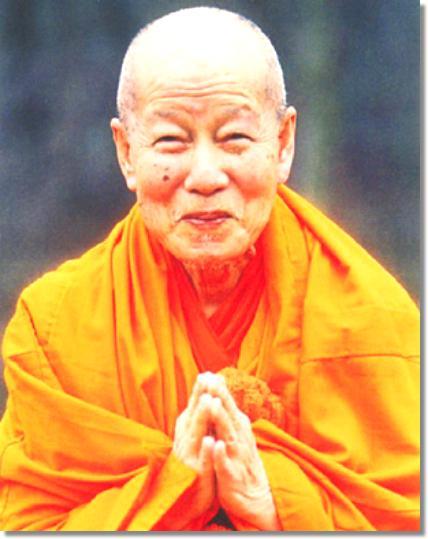
In the aftermath of the Khmer Rouge, Maha Ghosananda dedicated himself to rebuilding Cambodian Buddhism from the ashes. He established temples in refugee camps, ordaining new monks and restoring the spiritual foundation that had been so brutally destroyed.
He understood that Cambodia's healing could not come from political solutions alone — it required a spiritual awakening. The wounds of genocide needed the medicine of compassion, and the darkness of hatred needed the light of forgiveness.
In 1992, he initiated the first Dhammayietra — a peace walk across Cambodia's most war-torn provinces. Walking through active minefields and zones of conflict, he demonstrated that peace was not merely an idea but a practice, a path to be walked step by step.
As Sangharaja — the Supreme Patriarch of Cambodian Buddhism — he became the spiritual father of a reborn nation. His gentle presence, radiant smile, and unwavering message of peace made him beloved across Cambodia and respected worldwide.
Born into a humble Cambodian family in the southern province of Takeo, showing early spiritual inclination.
Ordained as a novice monk, beginning his lifelong dedication to the Dharma and Buddhist practice.
Advanced studies at Mahamakut Buddhist University in Thailand and at Nalanda in India, studying under renowned masters.
While studying abroad, the Khmer Rouge devastates Cambodia. Nearly his entire family and most monks perish.
Arrives at Thai border refugee camps, chanting sutras to traumatized survivors and establishing makeshift temples.
Appointed Sangharaja — the supreme patriarch of Cambodian Buddhism — leading the spiritual restoration of the nation.
Launches the first peace walk across Cambodia, walking through minefields and conflict zones for peace.
Awarded the prestigious Niwano Peace Prize for his outstanding contribution to interreligious cooperation and peace.
Maha Ghosananda passes peacefully, leaving behind a legacy of compassion, peace, and spiritual courage that continues to inspire.
Discover how he turned his life's mission into a movement for peace.
His Peace Mission